An animated series, and the production system built to make it possible
- Role
- Animation Director
- Disciplines
- Creative Direction · AI Production Pipeline · Shot Design · Editorial · Voice Direction · Production Economics
- Summary
- Direction and shot design for a children's animated series produced through a generative pipeline I designed, documented and costed. The films are the visible half; the protocol that made them repeatable is the half that matters.
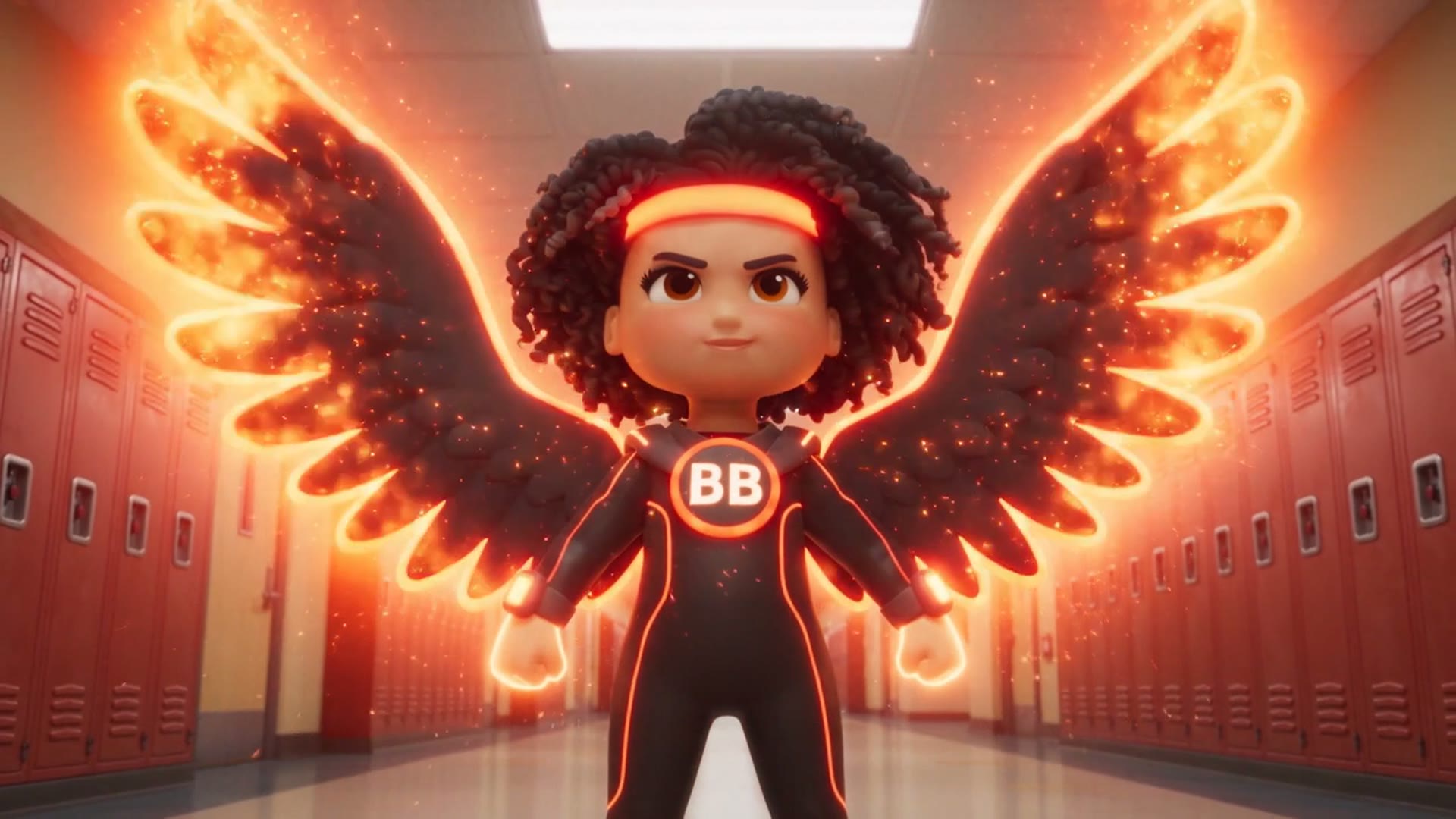
The brief
Blackbird is a children's animated series about a guardian who answers calls nobody else can hear. Its emotional centre is Jayden — a boy whose autism is written into canon rather than implied — and the show exists to correct one specific misunderstanding: that a sensory episode is behaviour to be managed, rather than something happening to a child.
I came onto the production as Animation Director. The property already had an owner, a canon and a story. What it did not have was a way to make it — a route from a script to finished animation that a small team could actually run, on a schedule, at a cost anyone could predict.
Building that route was the job. The films are what came out of it.
The problem nobody warns you about
Generative video is stochastic and priced by the second. There is no seed parameter, so re-running an identical prompt at a higher resolution does not hand back the same shot larger — it hands back a different take, with a different costume interpretation and a different number of characters in frame. And upscaling a cheap render costs roughly what generating a clean one costs, so the obvious economy is not an economy at all.
Which means the expensive failures are never motion failures. On this production the motion was strong from the first pass. Every costly re-roll was a content failure — a facility that came back as a manor house, denim instead of a varsity jacket, one character rendered twice, a badge misread as B1 instead of BB — and every one of them was discoverable before a single frame of video was paid for.
That reframes the whole discipline. The goal is not fewer retakes. The goal is retakes that cost eight cents instead of seven dollars.
Artifact
The ladder
RUNG          COST     ANSWERS
─────────────────────────────────────────────────────────────
Still image    ~$0.08   design · costume · architecture ·
                        palette · composition · staging
480p video     ~$3.00   voice, lip-sync and audio timing only
720p video     ~$6.60   final quality only
─────────────────────────────────────────────────────────────
One 720p shot = 88 stills.
If a still can answer it, a still answers it.

A shot may only be fired at 720p when the sole remaining
question is: does the finished version look good.
The 480p rung was specified, used, and then retired. Without a seed it validated a take that could never be delivered, and at that resolution it was too degraded to judge — three thousand credits for no reduction in uncertainty. The protocol records the reversal in full rather than quietly deleting it.
Measured, not estimated
440
credits per second at 720p — the rate is exactly linear
1.6×
iteration factor, planned from real re-roll history
88:1
cost of one finished shot against one still
~$223
total compute for the entire proof-of-concept
Every figure derived from generations actually run on this production, so the numbers can be checked rather than taken on trust.
The gate
The two most expensive re-rolls on the production had the same cause: a reference image that was never attached. Not a judgement error — an attention error. Writing a good prompt and attaching the right references are different kinds of attention, and the second one fails silently, because a prompt with a missing reference still looks complete.
So it stopped being a matter of attention. Every generation now clears a mechanical pre-flight: list every noun in the prompt that must match something already established, name the reference file attached for each one, state character counts and height relationships explicitly, and check costume, time of day and location against the adjacent shots in the cut.
Alongside it, each shot carries a written contract — three to six lines stating what the shot must contain to be usable. It drives the prompt going in and becomes the QC checklist coming out. "Does the facility match the plate, yes or no" is answerable in seconds. "Does this feel right" is not, and that is how defects reach a client.
The cast, built as a system
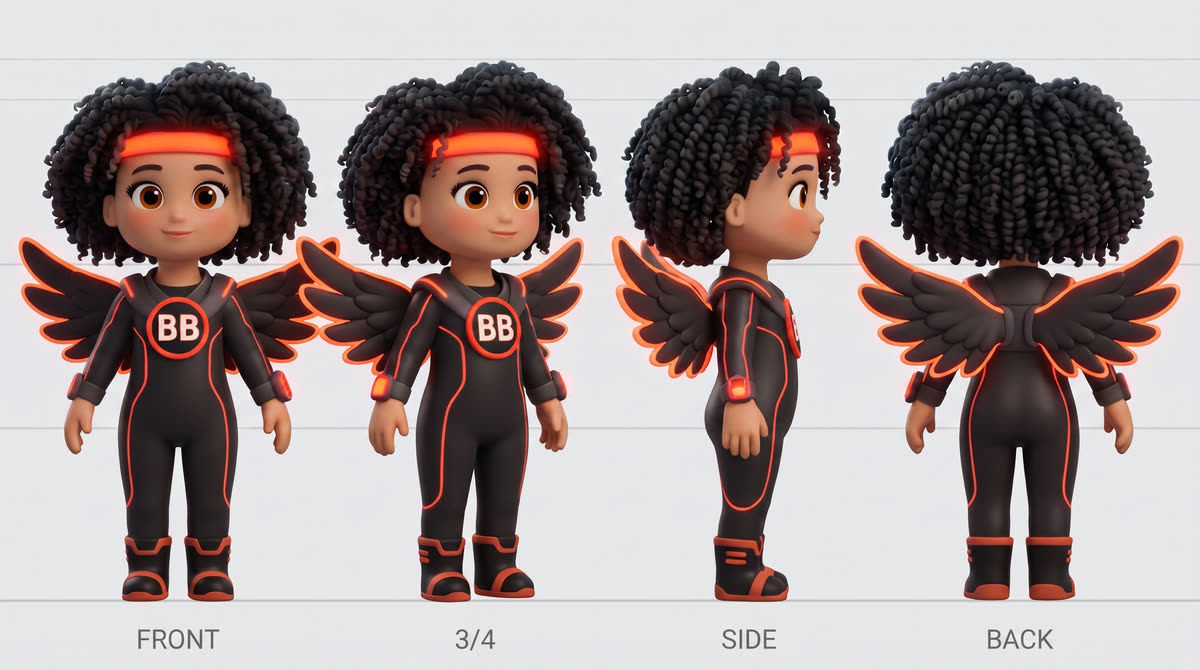
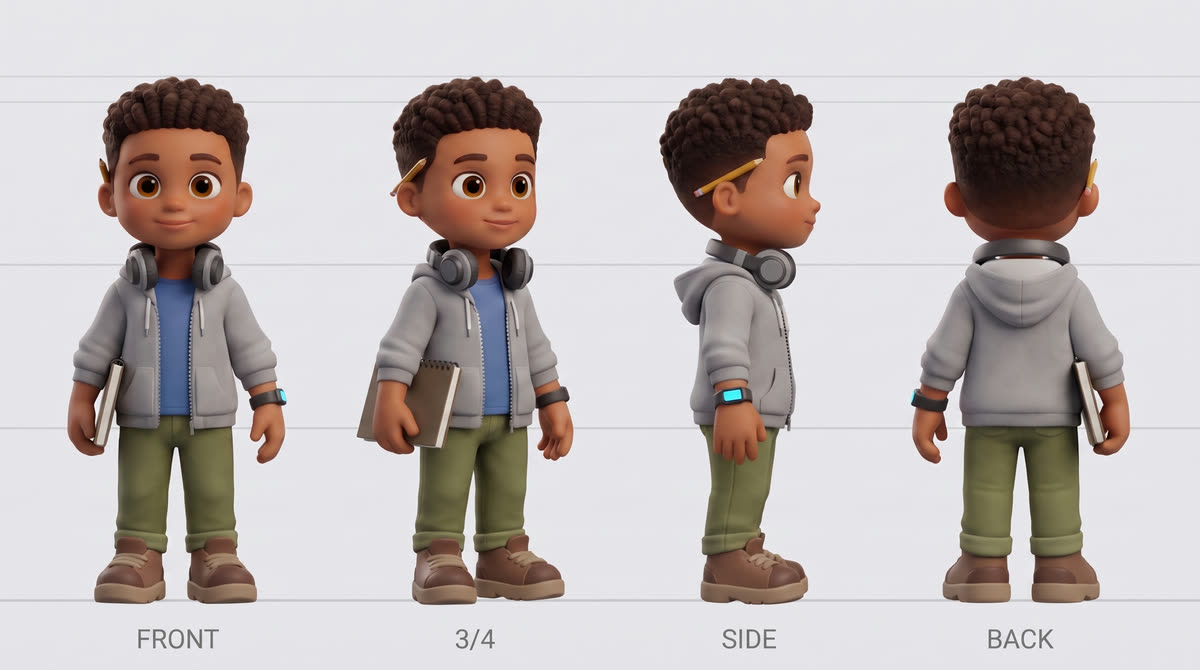
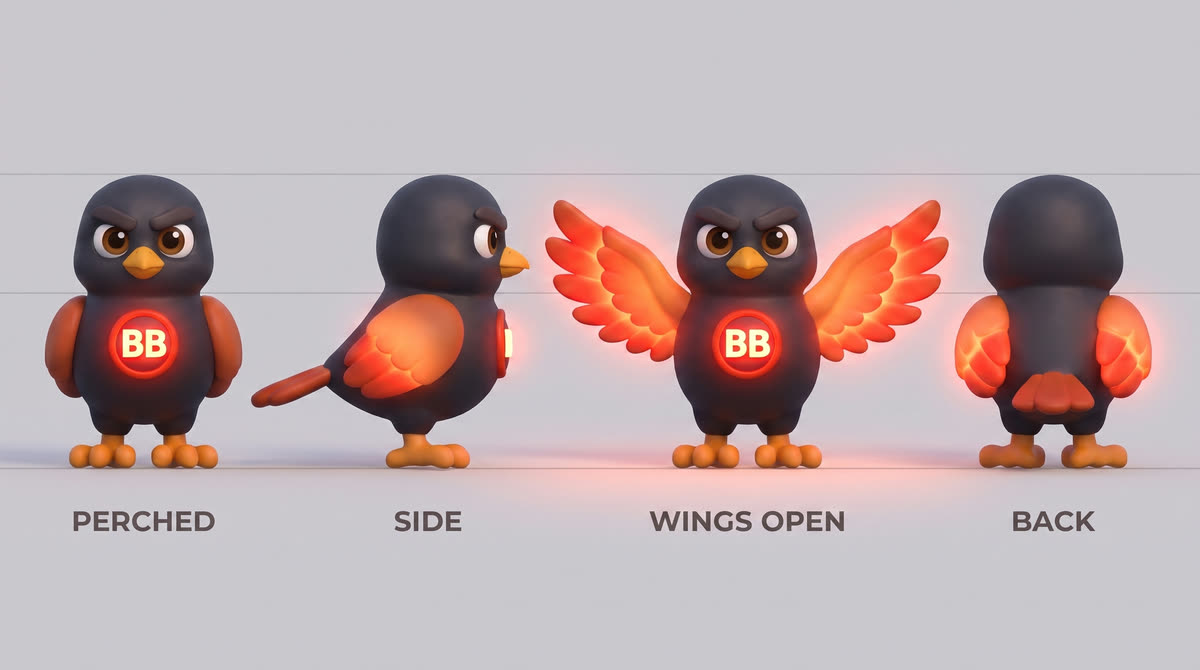
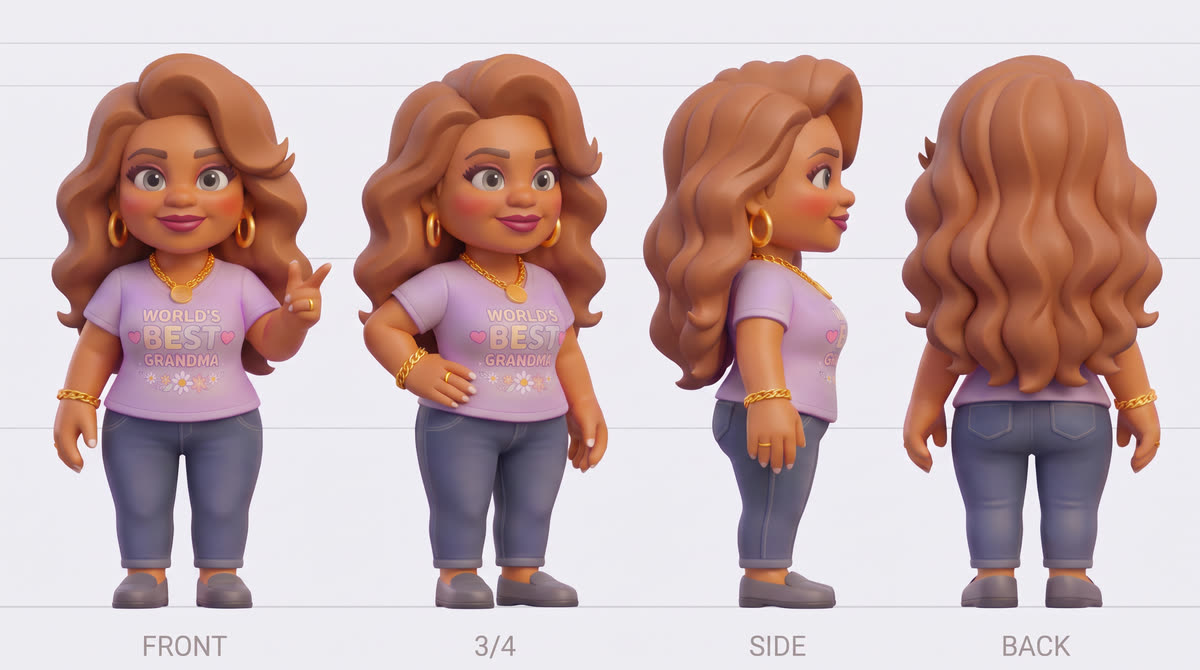
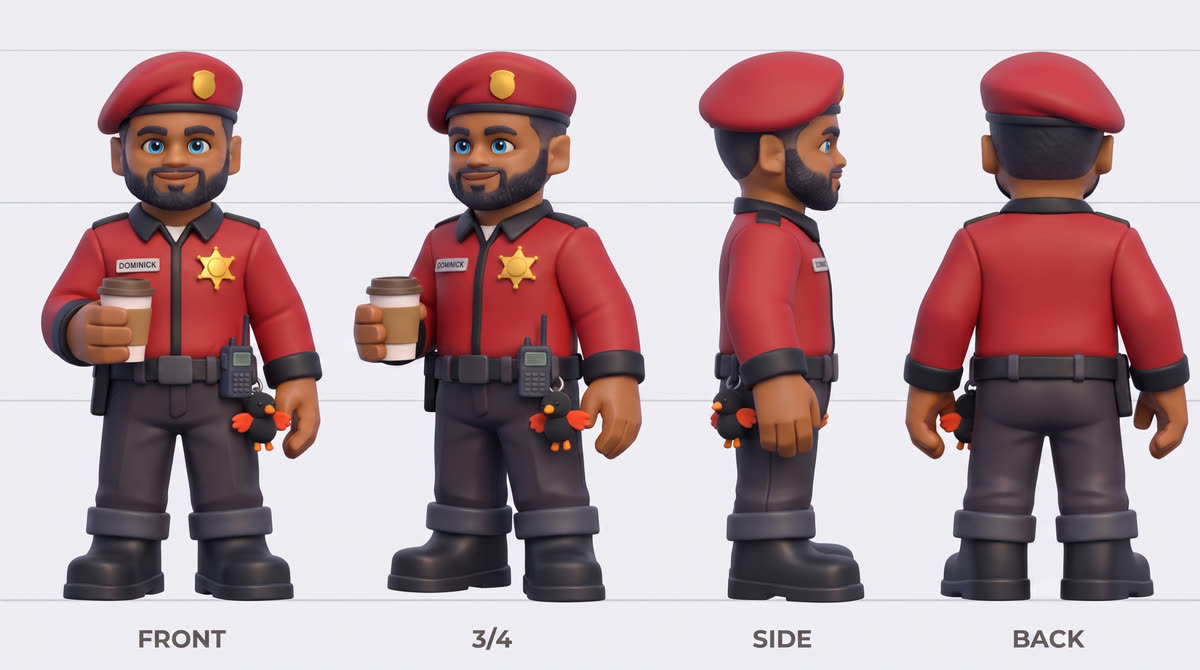
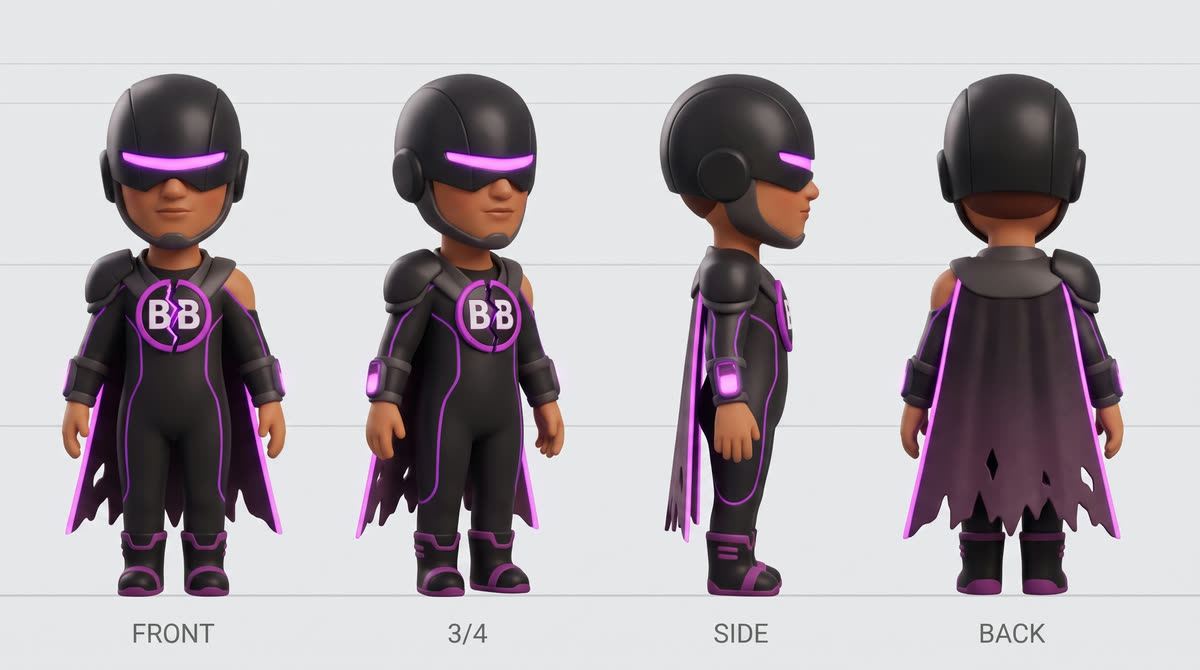
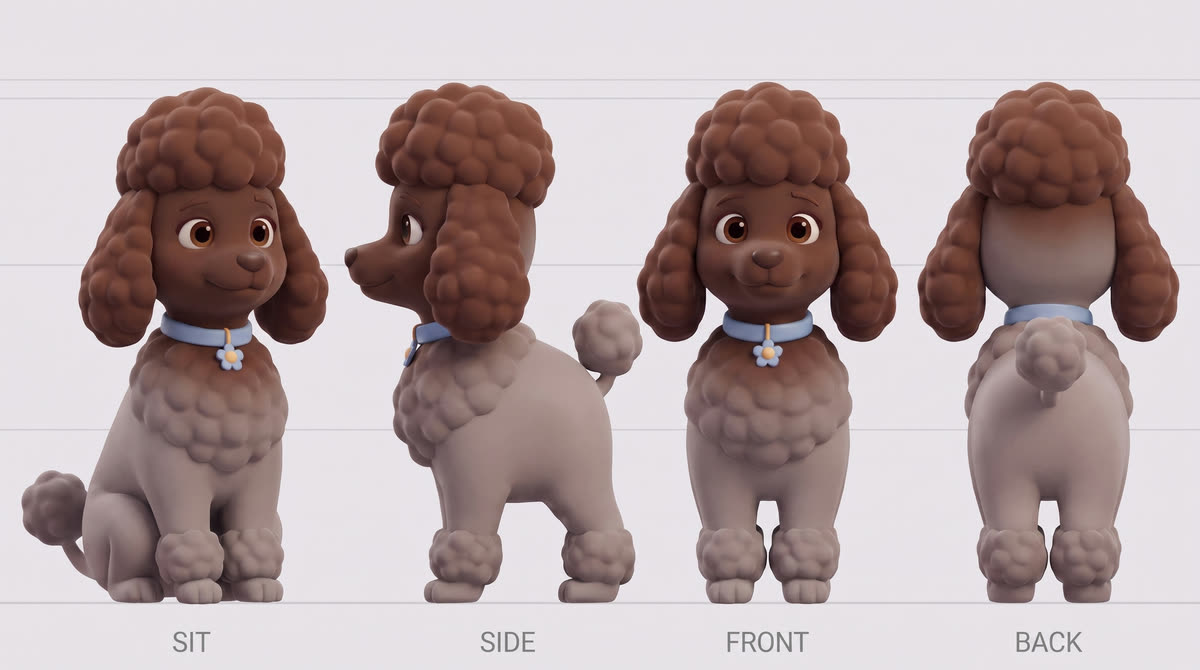
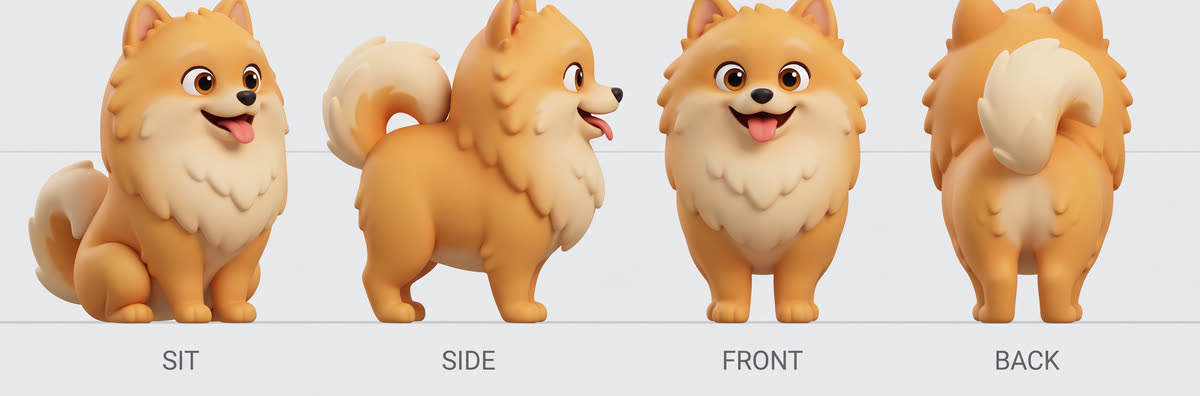
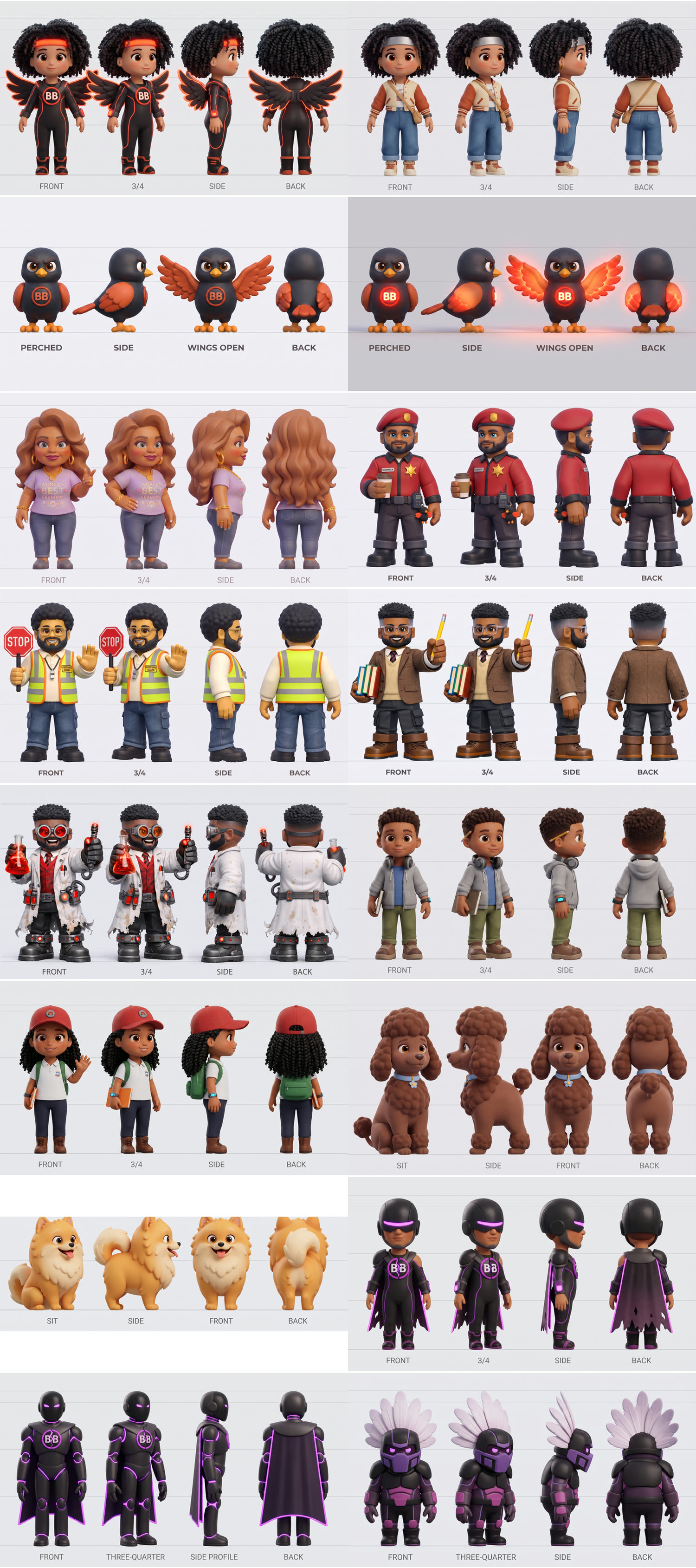
Sixteen character masters locked on 1 August, a seventeenth added later. Each is a four-view turnaround — front, three-quarter, side, back. A single beautiful illustration makes a character drawable once; a turnaround makes it reproducible across hundreds of shots, which is the only version of the problem that matters at series length.
Choosing the less obvious tool
Each approved turnaround became a named, reusable reference in the generation workspace — twelve of them, each carrying a written design spec for the details that must never drift: which shoulder the bird lands on, which villain keeps a bare jaw, which dog has no collar.
The workspace offered a more heavily marketed option: trained likeness models. They were the wrong choice, and checking why before committing saved the pipeline. They bind to photoreal generators, so twelve of them would have produced twelve realistic strangers in a style this show does not have — and they generate one character at a time, which would have made every two-hander in the story bible impossible to shoot.
The quieter feature took an instant to set up, worked with the model we were actually using, and put unlimited characters in a single frame. That choice is why the squad can stand together.
Artifact
Canon as a filesystem
~/BlackBird/
├── *_MASTER.png      ← THE SELECTION. If it's here, it's canon.
├── FINAL_CAST_SHEET.png
├── working/          ← 114 files. Never used in production.
└── superseded/       ←  42 files. Kept for provenance.

To change canon: promote a file to *_MASTER.png, and rename
the old master with the reason it lost —
  grandma_glossy_hair.png
  lumea_cape_era_MASTER.png
Generative tools ship no version control for visual canon, so the folder became one. Two files were caught still named MASTER while being two style generations out of date — exactly the kind of thing that reaches a client if nothing is watching.
Boards and plates
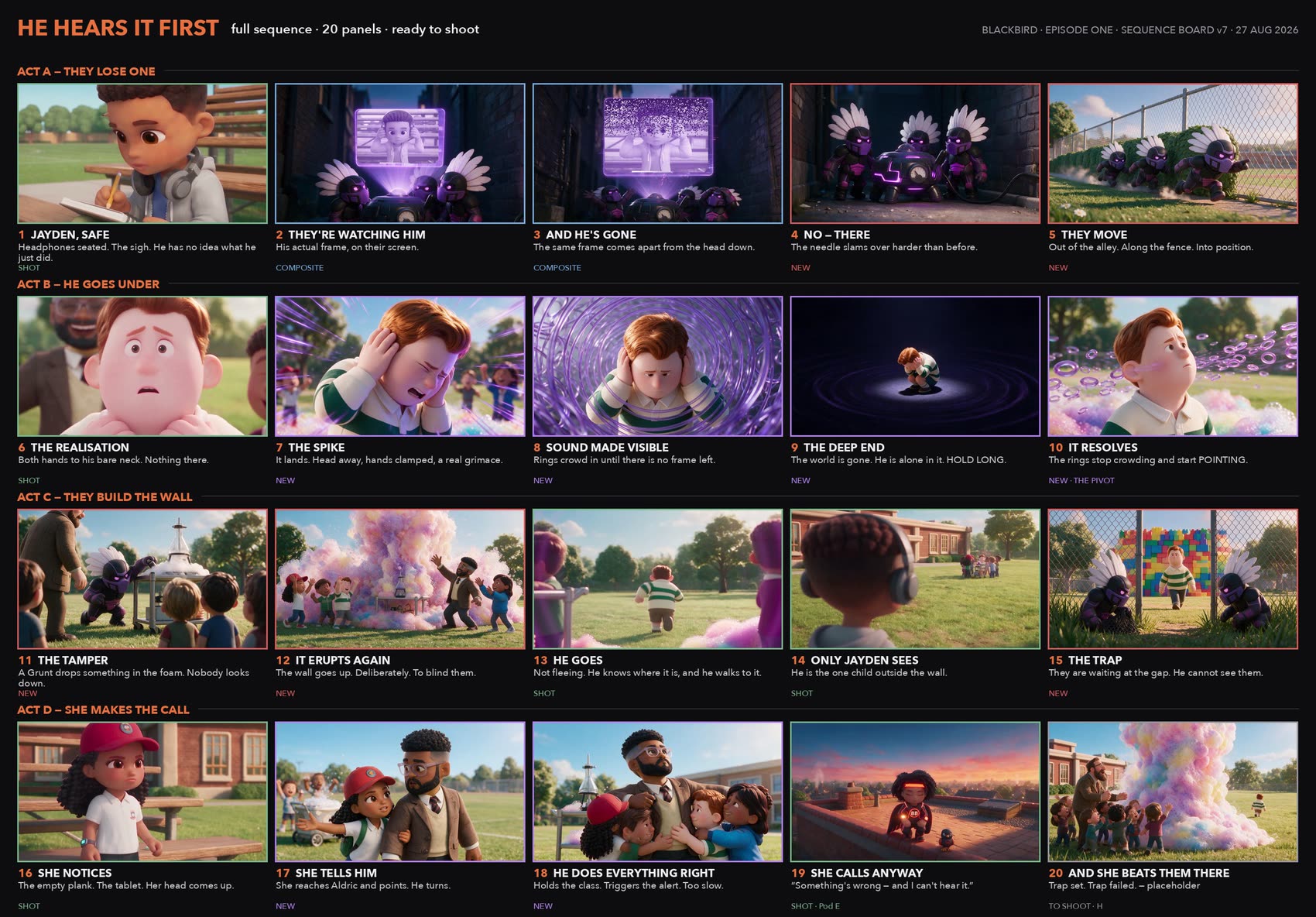
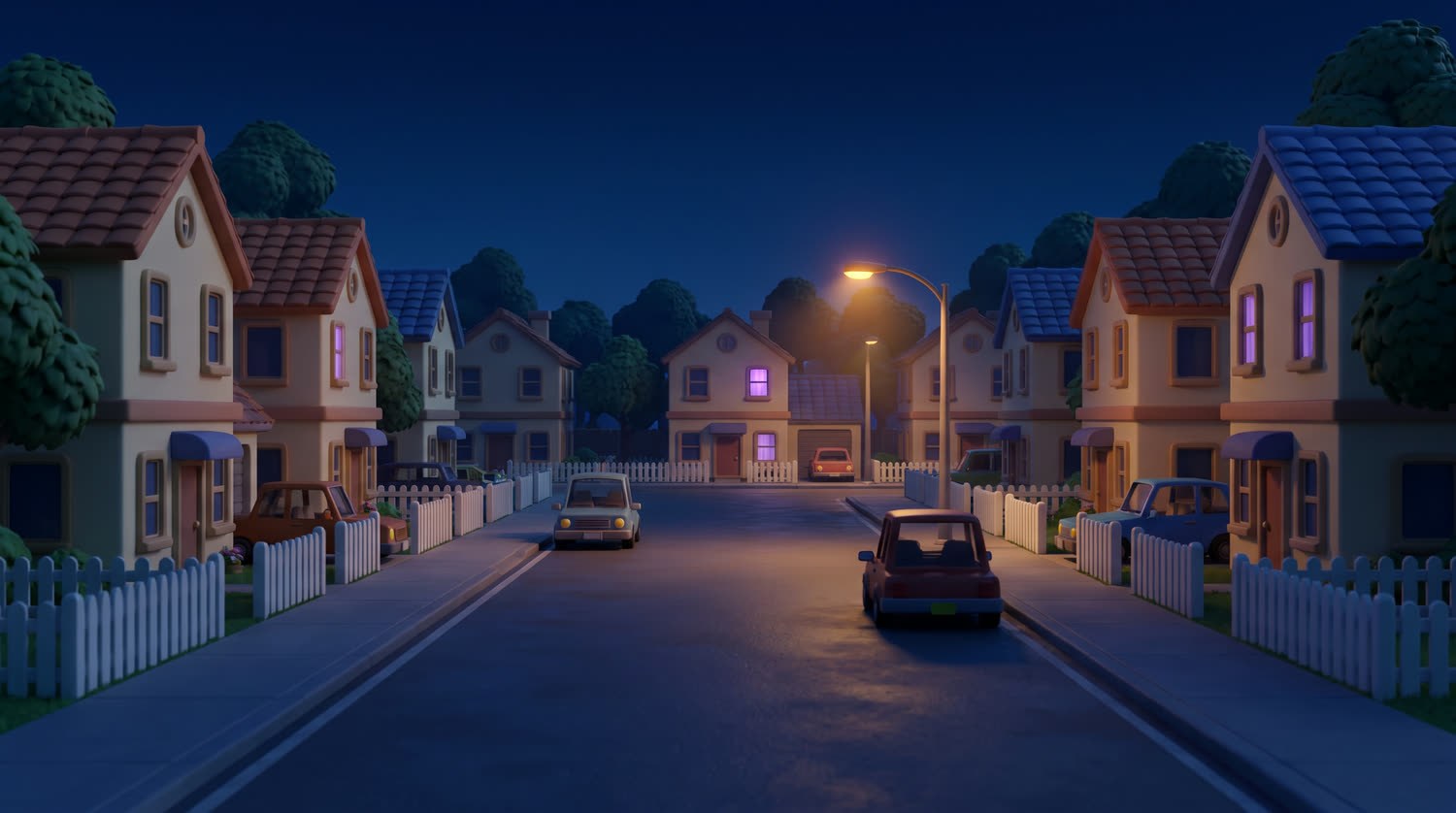
Locations were locked as plates before any shot was bought, because a still of the destination costs eight cents and a wrong destination costs seven dollars.

Being wrong about the most important scene
The show's central sequence is a sensory overload, and we had been animating it wrong from the first beat. Our version opened on a child already in distress — hands over ears, mid-episode, static.
The correction, which came from the client and outranked my instincts, was that the real pattern begins with a delay. A sound arrives that nobody else in the scene can hear. Then nothing happens. The response comes later — movement, pacing, escalation — long enough after the trigger that no one present connects the two.
That gap is the entire misunderstanding the series exists to correct, and we had never once shot it. Everything about the sequence changed: the hero stopped being comfort and became someone who goes to stop the noise at its source, and the bystanders stopped being villains and became ordinary people making an ordinary mistake.
It is the clearest lesson the production taught me. A pipeline that can produce anything quickly is worth nothing if the thing it is producing is the wrong beat, told confidently.
What shipped
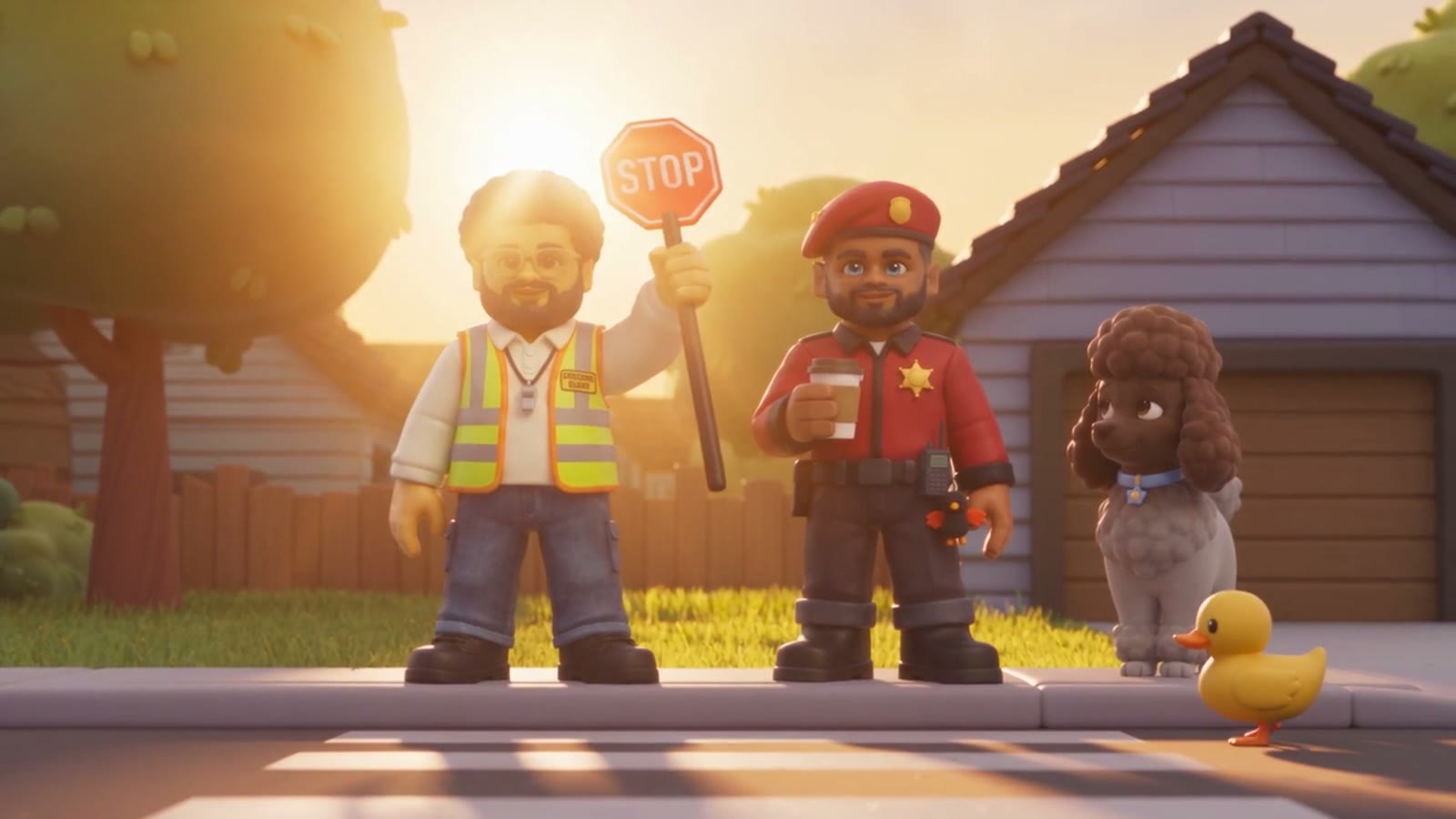
Episode one, finished and released. Before it, a trailer through six cuts, a short film, a teaser set with alternate scores, and title and logo stings with an end-credit system. Underneath all of it: seventeen character masters, twelve location plates, cast voices, a location bible, a canon reconciliation, and a written protocol that governs how every future shot is specified, checked and costed.
It was scoped as three costed options, with a recommendation that the longest of them was not deliverable in the time available — an argument against my own upside, because the material that would have made seven minutes worth watching had not arrived yet. The version that shipped is the one that could actually be made well in the time there was.
The asset base is the part that compounds. Every character, plate, voice and title built in that first month is reused at no repeat cost, which is why episode one is the most expensive episode and every one after it gets cheaper.
What this demonstrates
- Creative Direction
- Generative AI Production
- AI Workflow Design
- Production Economics
- Visual Storytelling
- World Building
- Editorial & Sound
- Client Direction
Next project
Roadify
A driving product that has to earn every second of a driver's attention