An AI-native platform connecting content, creation and community
- Role
- Product direction · Brand system · AI-assisted development
- Disciplines
- Product Strategy · Interface Design · Brand Identity · Platform Architecture · Creative Direction
- Summary
- An active development project for AI-native video: a web application with iOS and Android build targets, a Supabase backend and automated content workflows. Product direction, brand and development evolve together.
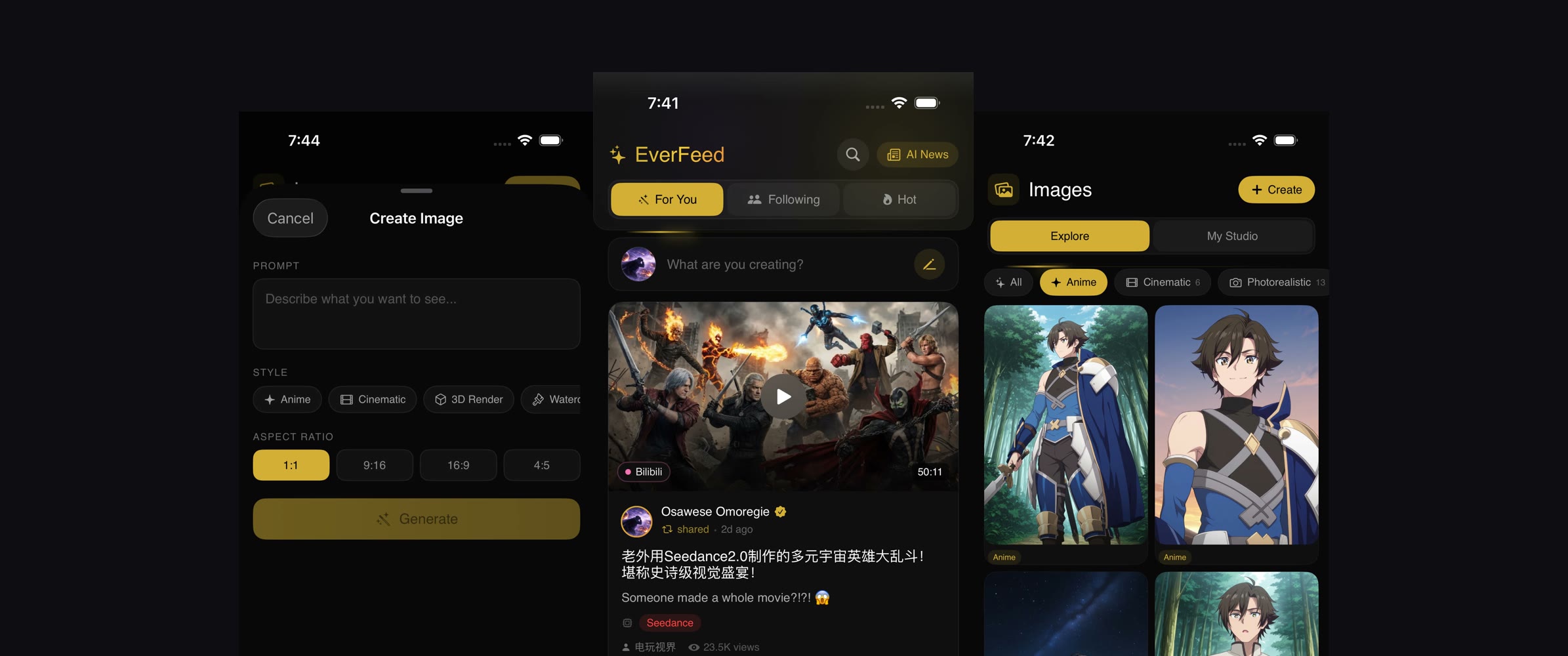
Status and contribution
In active development. This case study covers the web implementation and iOS and Android build targets, with screenshots of development interfaces. Originals and its participation economy remain product direction rather than a launched paid service.
My contribution spans product requirements, interface and brand direction, and AI-assisted implementation. I use coding assistants to develop and iterate on the application alongside the product and design work.
The premise
AI video has no home. It gets buried by recommendation systems tuned for human-shot footage, removed without explanation, and scattered across six platforms with no discovery layer connecting any of it. A creator who makes something remarkable has nowhere for it to land.
Everside is the answer to that: a single place where AI-native work is aggregated, ranked by the community rather than an opaque model, and where the same app that shows you the work also lets you make it and build a world around it.
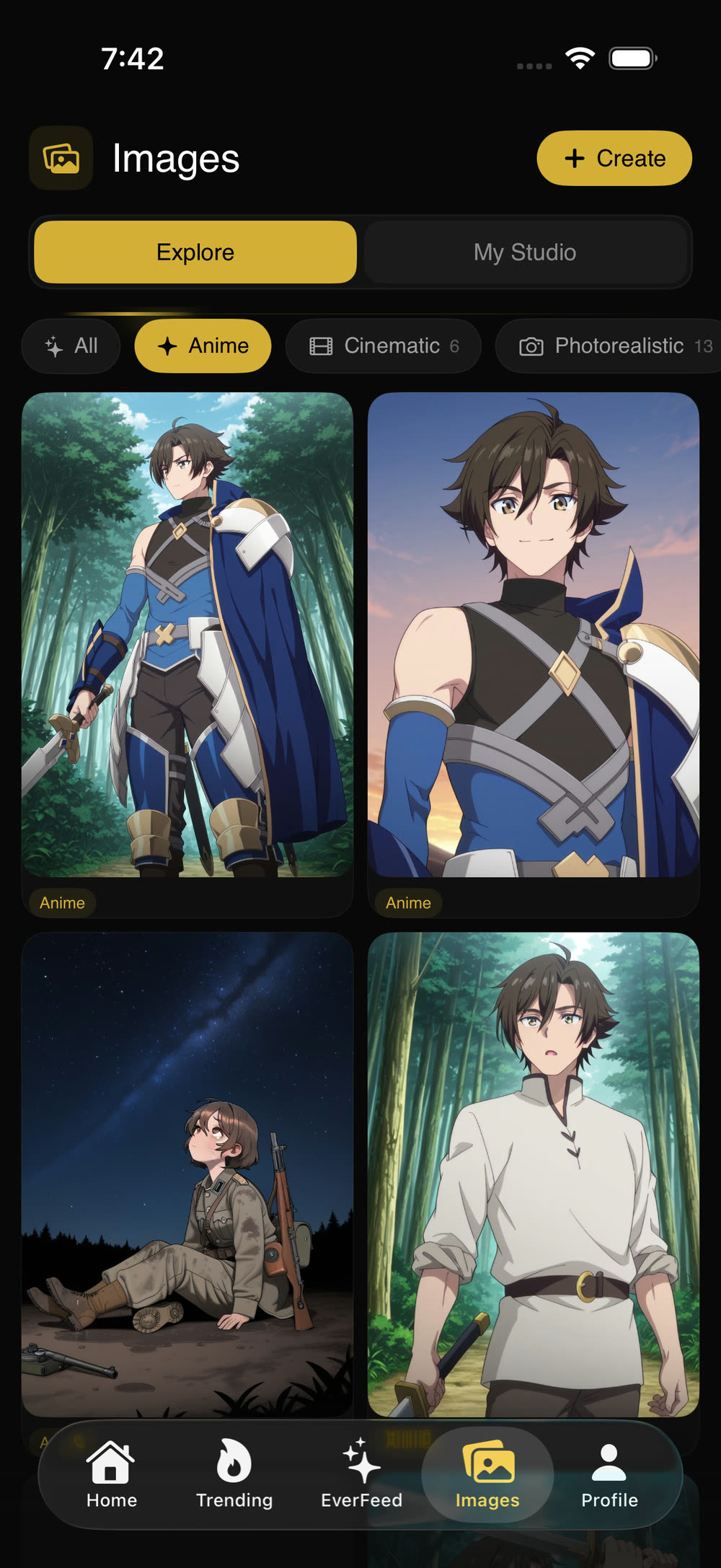
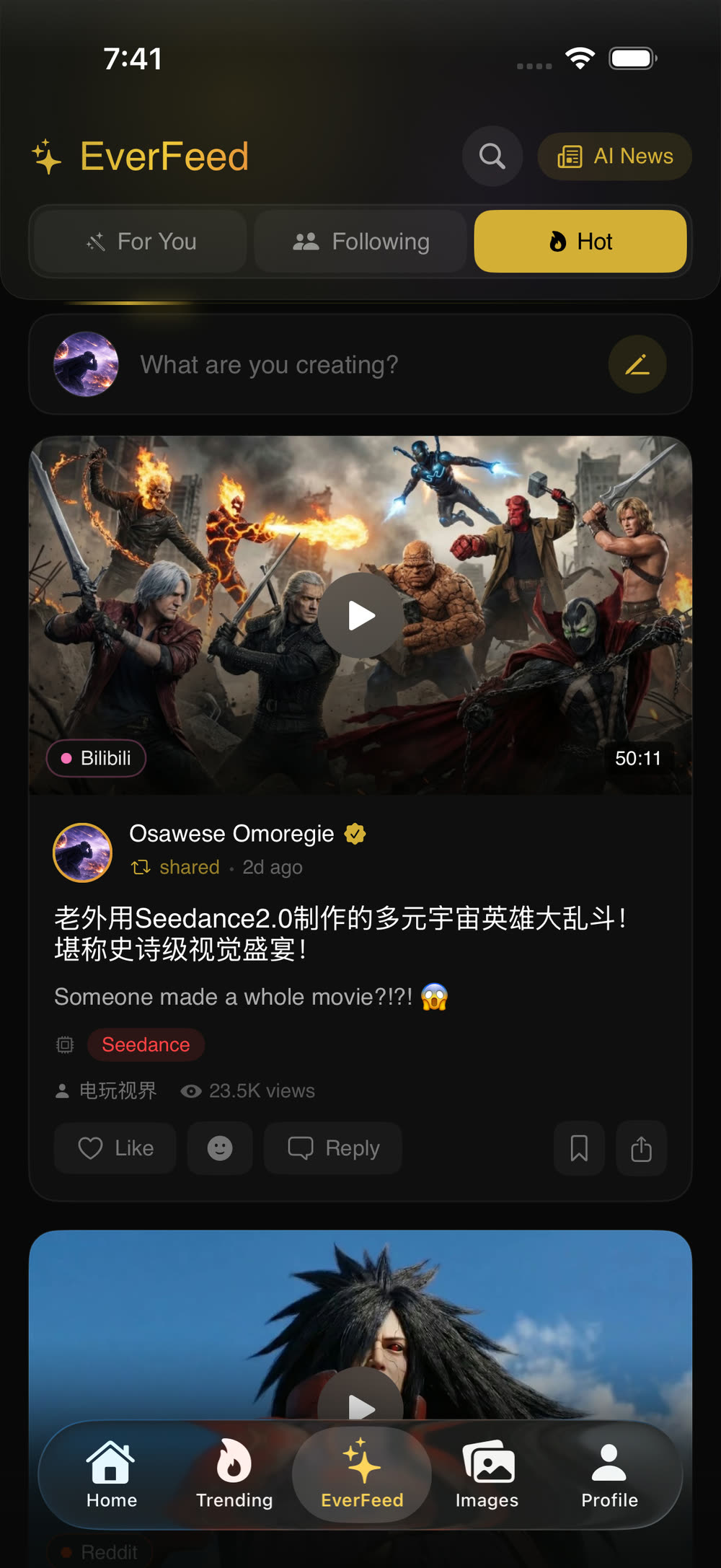
Development interfaces from a shared web codebase with iOS and Android build targets.
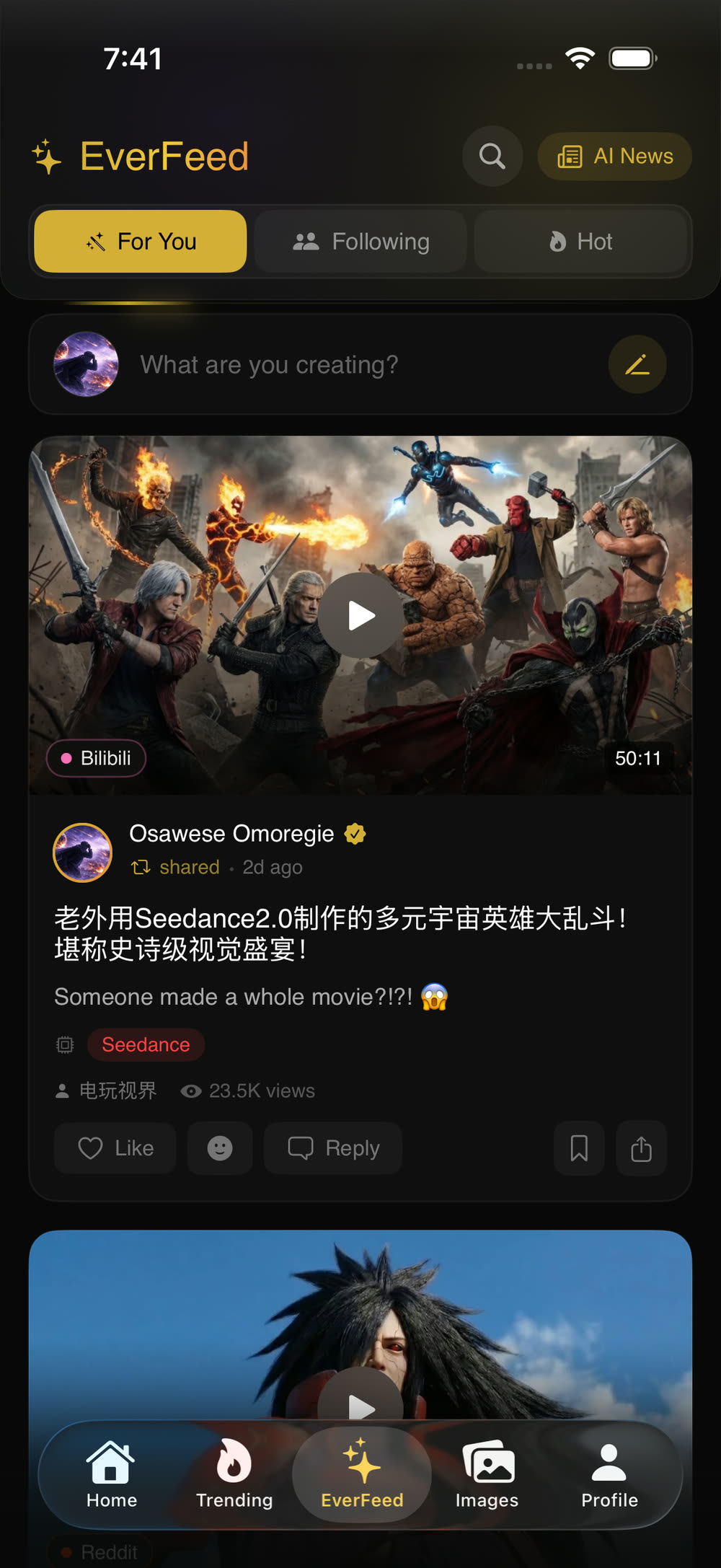
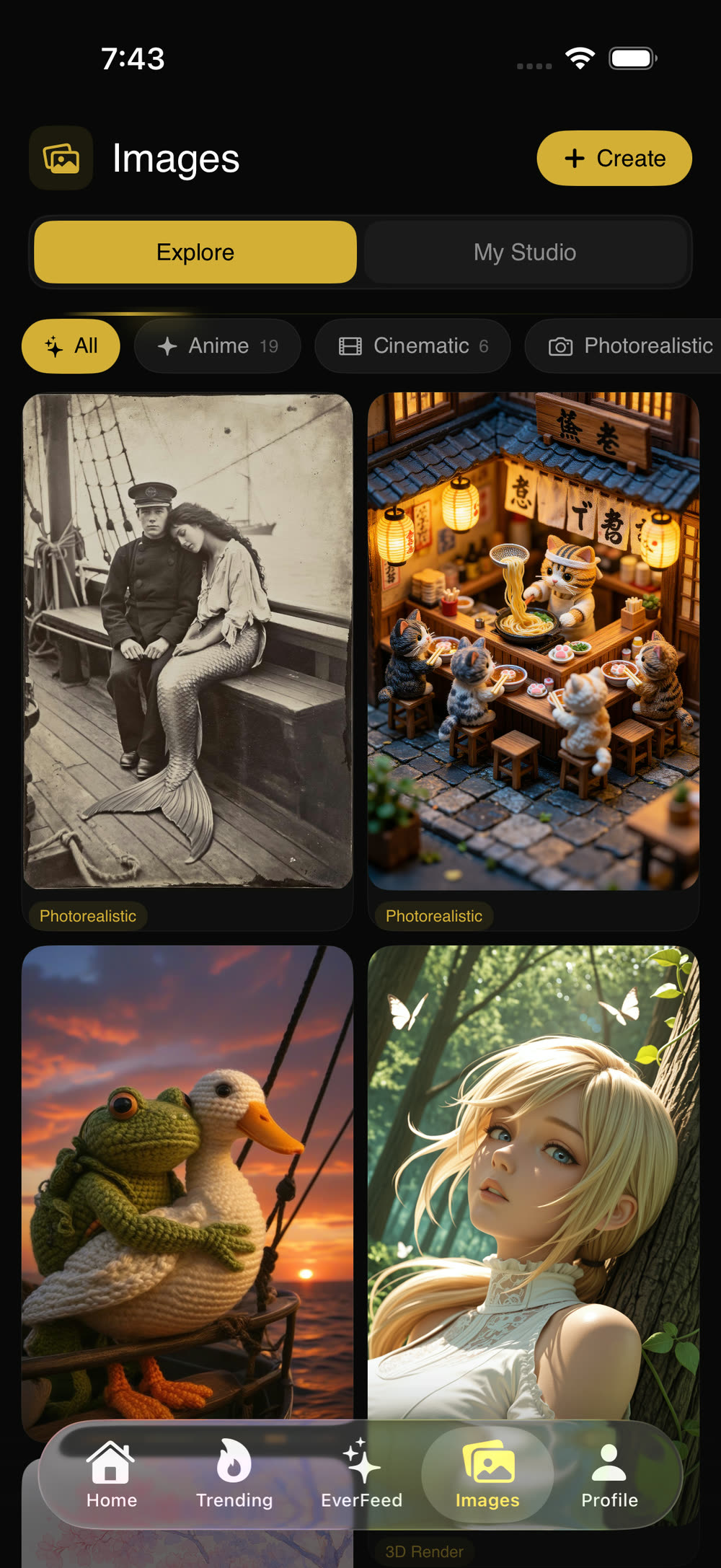
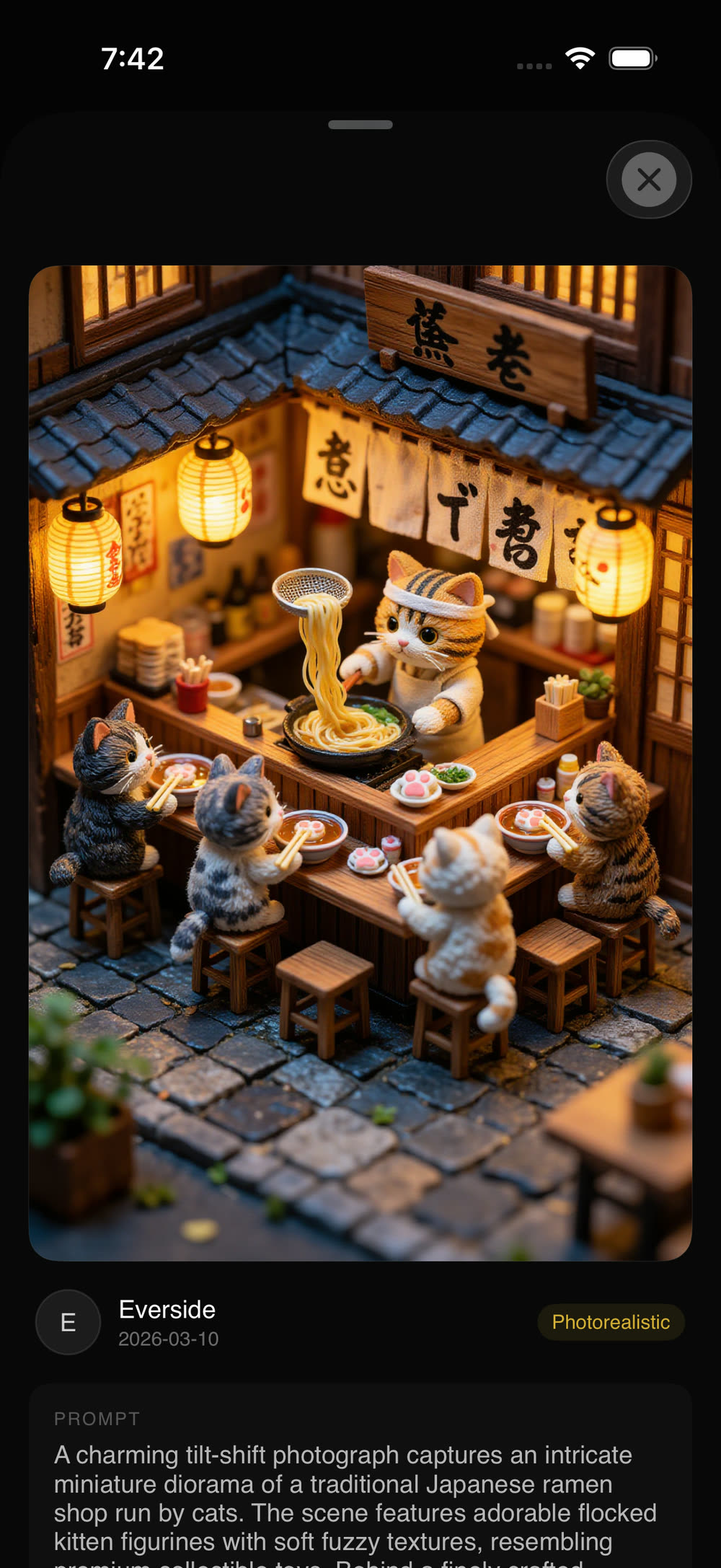
Four products that have to feel like one
The product plan connects four areas in one shell: EverFeed for discovery, Images and Studio for creation, Universes and Characters for original IP, and Originals for series and participation. These areas are at different stages of implementation; the plan describes the intended whole, not a claim that every workflow is production-ready.
The design problem is coherence. Four feature sets, four different interaction models, and one navigation that has to make them feel inevitable rather than bolted together. It resolved into a single shell — one menu structure, one dock, one set of surfaces — so that moving between watching, making and world-building never feels like changing applications.
A brand written down, not assumed
Everside carries a complete identity system: a colour architecture built on deep black surfaces with a signature gold and per-feature accents for wayfinding, a display and body pairing chosen for editorial confidence over novelty, and a voice guide with a say-this / not-this table because tone drifts faster than colour does.
The voice rules are opinionated on purpose. Speak to creators as peers, not as users. Talk about AI without the defensive caveat, because hedging is its own kind of position. Short sentences. "Join the Verse" over "sign up for our platform."
Writing it down is what lets a product this broad still sound like one voice across a store listing, an onboarding screen and a push notification.
Artifact
The participation principle
Fans should never pay to understand the world.
Fans should pay to participate in the world.

Every paid action must produce a persistent outcome:
  an image · a video · a chat session ·
  a lore unlock · a supporter identity ·
  a campaign contribution

Creators keep 100% ownership of the IP.
The economic model for Everside Originals, written as principles before prices. Discovery — the pilot, the cast, the premise, the premiere conversation — is free by design; the credit economy only begins where participation does.

Technical implementation
The implementation includes a Supabase backend, edge functions for scheduled AI-topic ingestion from source registries, Capacitor mobile build targets, and a content pipeline with a quality gate.
There is also a director console — a tooling layer for producing series content on the platform, which is where this project and Blackbird quietly meet. The pipeline thinking is the same; only the output format changes.
What this demonstrates
- Product Strategy
- Interface Design
- Brand System Design
- Full-Stack Development
- Platform Economics
- Cross-Disciplinary Production
Next project
Sanshu
Original IP, built in public, over five years